In today’s modern life, it is becoming very difficult to maintain a balance between work and health. Everyone has a busy schedule, deadlines, meetings, and life moves so fast that we neglect our bodies and health. The purpose of fitness is not just to lose weight or build muscles, but it also improves the quality of your overall life. When you are active, your mind is fresh, you handle stress better, and your energy level is high.
But the problem is that it is not easy to find time for exercise in a busy routine. People get tired thinking about how to go to the gym after working from morning till evening, or how to find time for a walk. This blog addresses the issue of how you can take care of your fitness despite a busy schedule. In it, we will discuss such realistic strategies that everyone can easily incorporate into their routine without affecting their work. The biggest challenge today is not how to become fit, but how to take out some time from your day for yourself so that you can live a long and healthy life.
- Time Management: Finding Space for Fitness in a Packed Schedule
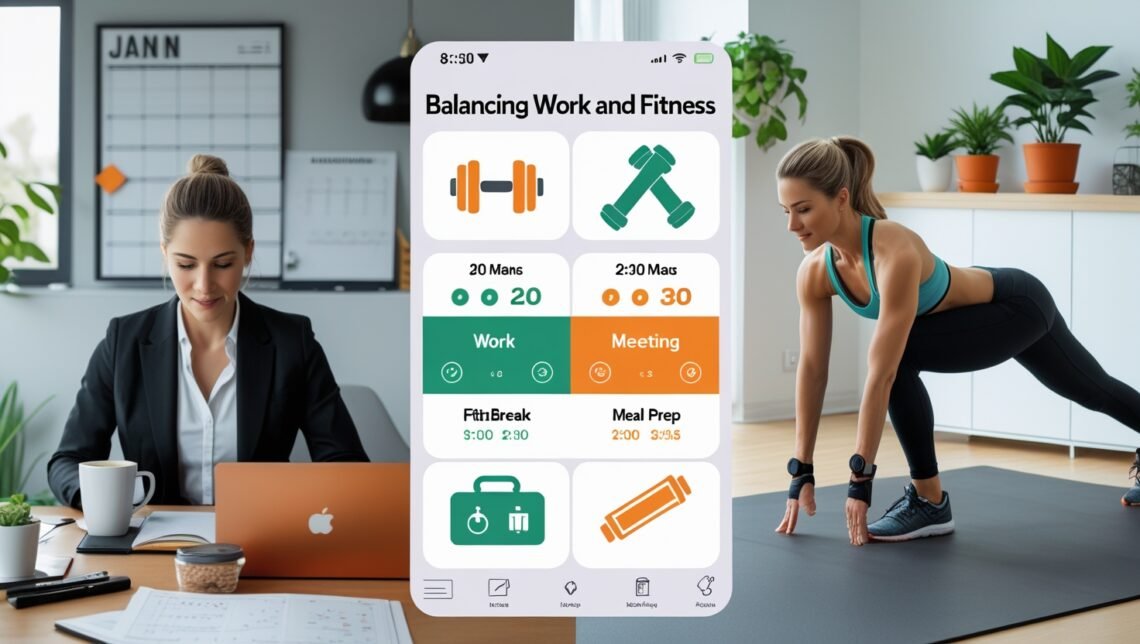
Time management is a skill that is not only important for work but also for health and fitness. When your schedule is tight, you have to use every minute of your day wisely. The first step to include fitness in your routine is to do an honest analysis of your day to see what takes up more of your time. You will have to understand that if you do not make time for your health, then your busy schedule will also come to a halt someday, because if there is no health, then nothing is of use. It is very helpful to schedule workout time in your calendar. Just like you schedule time for meetings or tasks, similarly, there should be a fixed time for fitness as well.
If you find it difficult to go to the gym, you can do small workouts at home or during office breaks, like stretching, jumping jacks, or short walks. Some people prefer to get up a little early in the morning and work out, some do it in the evening before dinner. Whatever time you can easily spare is the best time for you. It is not necessary that you spend an hour every day; if you remain consistently active for even 15-20 minutes a day, it can make a huge difference to your health. Managing time is not difficult; you just have to prioritize.
- Incorporating Movement into the Workday:
When you spend the whole day in the office or at a desk job, it is difficult to find time for movement, but in reality, if you plan a little, you can stay active along with your work. Movement does not only mean going to the gym or doing heavy workouts; even small movements keep your body active. In the morning, when you reach the office, use the stairs instead of the lift. Getting up from your chair after every 1 hour and walking for a while or doing stretching is very beneficial for you. You can walk for 10-15 minutes during your lunch break or convert a meeting into a walk-and-talk where you discuss work while walking with a colleague. Standing desks are also a good option where you can stand and work for some time, so that both your posture and energy level remain better.
People often feel tired after lunch, but if you take a short walk during that time, you feel fresher. If possible, in the office, you can also try chair exercises or desk yoga, which are simple and do not disturb anyone. These small movements maintain your health and keep you physically active despite long working hours. These habits slowly become a part of your routine.
- Choosing Efficient Workouts for Maximum Results:
When you are short on time, you need workouts that give you maximum results in less time. Efficient workouts mean that you challenge your body to the fullest in a short duration so that calories are burned and muscles are activated. High-intensity interval training (HIIT) is very popular these days because it is short and result-oriented. You can get the same benefits as long aerobic sessions by doing a HIIT workout in just 15 to 20 minutes. Bodyweight exercises like push-ups, squats, burpees, and planks can be easily done at home or in a quiet area of the office. You don’t need any equipment and can adjust these exercises according to time. If you’re a beginner, you can start with a walk or light jog and gradually increase the intensity.
There are lots of free workout videos available on YouTube that are short and have proper guidance. Even if you have just 10 minutes to spare, you can be active in them and take a step towards your fitness goal. Efficient workouts don’t make you tired but boost your metabolism and help release feel-good hormones. The aim of these exercises is smart training, which doesn’t take much time, but the result is impactful.
- Staying Motivated and Consistent Despite a Busy Life:
It is difficult to maintain motivation and consistency in a busy life, but both these things make your fitness journey successful. Motivation comes and goes, but if you form habits, then you can maintain consistency. First of all, it is important to understand that not every day will be perfect, but if you have set realistic goals for yourself, then you can easily work on them. Divide your fitness goals into small milestones, like starting a walk in the first week and adding a 15-minute workout in the second week. When you see your progress gradually, motivation automatically increases. It is also very helpful to use fitness apps that give you daily reminders, track your progress, and cheer you up when you show consistency.
Exercising together with a workout buddy or friend also keeps you motivated, as both of you encourage each other. If you are under work pressure one day and cannot work out, do not feel guilty; just get back into your routine the next day. You will naturally stay motivated if fitness is given importance in your environment. By reminding yourself you are doing all this for your health, to improve your energy and quality of life, it keeps the motivation alive.
- Conclusion:
When you incorporate fitness into your busy life, it has an impact not just on your body but on your entire life. A balanced lifestyle doesn’t mean that you go to the gym every day or become an athlete, but that you take care of both your physical and mental health, no matter how busy you are. When you incorporate a little movement, exercise, and healthy choices into your routine on a regular basis, you feel more focused, more energetic, and mentally strong. Your work improves, you handle stress better, and your personal life also finds harmony. In the long term, these small fitness habits protect you from many major health issues like high blood pressure, diabetes, obesity, or depression.
Your immune system becomes stronger, and you fall ill less often. Fitness improves your self-confidence and makes you feel more productive and positive. The purpose of this blog is to give you practical and easy strategies so that you can balance your work with fitness. Every person has a busy schedule, but the difference is who knows how to make time for themselves in that busy schedule. If you start making small changes from today, then tomorrow you will enjoy life more with a better version of yourself
FAQs:
Q1: How can I find time for exercise when my work schedule is already full?
You can find time by managing your day more efficiently. Start by analyzing your daily routine to identify time-wasting activities that can be reduced or replaced with short workouts. Scheduling exercise like any other important meeting in your calendar and choosing brief, effective routines like a 15–20 minute walk or home workout can help you stay consistent without disrupting your workday.
Q2: What are some simple ways to stay active during a desk job?
Incorporate small movements throughout the day like taking the stairs, walking during lunch breaks, using a standing desk, or doing light stretches every hour. You can also turn meetings into walking discussions or try desk yoga and chair exercises. These small changes add up and help keep your body active even when working long hours.
Q3: What kind of workouts are best for people with limited time?
Efficient workouts such as High-Intensity Interval Training (HIIT) are ideal because they burn calories and build strength in a short amount of time. Bodyweight exercises like squats, planks, and push-ups are also effective and can be done anywhere without equipment. Even 10-minute sessions daily can have a big impact when done consistently.
Q4: How do I stay motivated to work out regularly when life gets busy?
To stay motivated, set small, achievable goals and track your progress. Use fitness apps for reminders and encouragement. Working out with a friend or joining a group challenge can also boost accountability. Remember your reason—better health, energy, and stress relief—and forgive yourself if you miss a day. Just restart the next day with commitment.
Q5: Can short workouts still provide real health benefits?
Yes, even short workouts can significantly improve your physical and mental health. Regular movement, even if only 10–20 minutes daily, can boost energy, reduce stress, improve focus, and lower the risk of chronic diseases. The key is consistency—doing a little every day builds up to long-term health improvements and better quality of life.