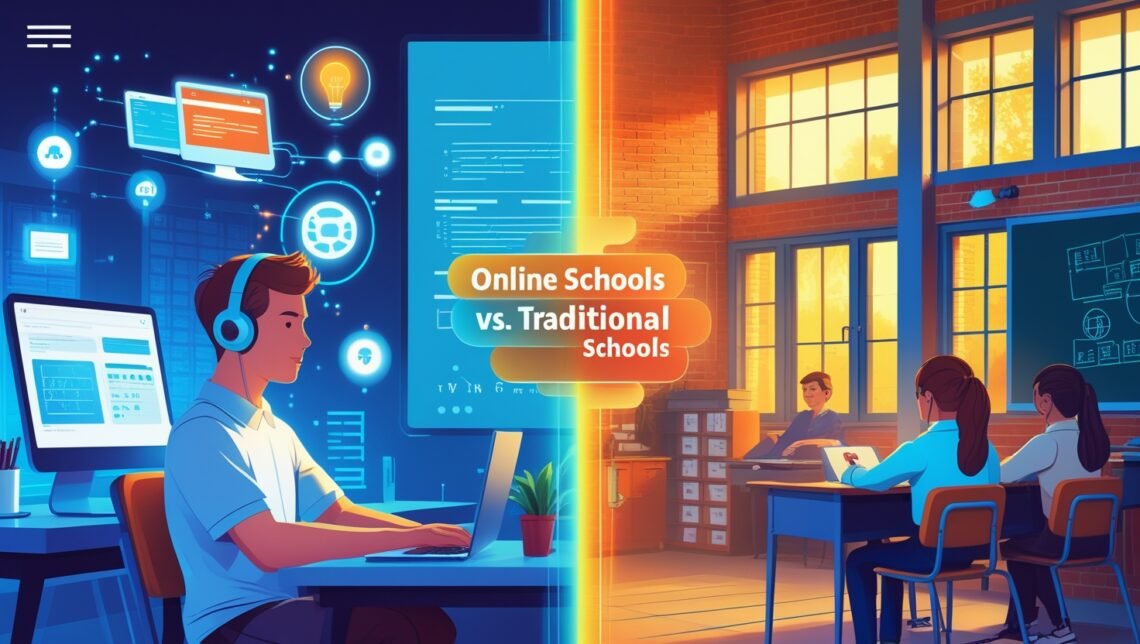
Today, two different methods of learning have become very popular in online schools and traditional schools. Traditional schools are those where students physically go to the classroom and meet teachers, while in online schools, all learning activities are done over the internet. Both systems have their advantages and disadvantages, and a different learning style may be better for each student. Online schools emphasize flexibility and accessibility, while traditional schools provide improvements in social interaction and a structured environment. Today’s students and parents need to understand which system is more beneficial for them so that they can achieve their daily goals easily.
This blog will focus on this topic and compare the learning experiences of both systems to help readers in their choice. It has to be understood that each learning system has its style and approach, which affects the learning outcomes of students in different ways. In this introduction, we will gain a basic understanding of the basic specialties of online and traditional schools and why both are making their place in today’s times.
2. Learning Environment:
The biggest difference between online schools and traditional schools is in their learning environments. In traditional schools, students are in a physical classroom with teachers and friends, where face-to-face interaction takes place, which provides an opportunity for better communication and teamwork. The atmosphere of the classroom motivates students, and their attention remains more focused. In contrast, learning in online schools is virtual, where students attend classes from their home or any other place using a computer or mobile.
This environment provides flexibility, but sometimes also increases distractions. In online learning, students have to focus more on their self-discipline and time management skills. Interaction can be limited in a virtual environment, but technologies such as video calls, chat rooms, and discussion forums help make up for this shortcoming. Student experiences vary between the two systems due to the differences in the learning environments, and it depends on their learning styles and preferences as to which type of environment they find best.
3. Interaction and Socialization Opportunities:
Socialization and interaction are vital to student development. In traditional schools, students meet with their teachers and classmates every day to learn not only academic things but also friendship, teamwork, and communication skills. Group activities, playgrounds, and school events are important tools for developing social skills. In online schools, interaction is limited to digital platforms, where students connect through video conferences, chats, and discussion forums. But this virtual socialization can sometimes lack a personal touch and emotional bonding. Online interaction can be difficult for some students, especially those who are introverts or those with technology problems.
But many new methods are being developed for online learning, such as virtual clubs and group projects that promote socialization. The level and quality of interaction differ in both systems, and students should choose their environment according to their social needs and comfort.
4. Flexibility and Accessibility
The most important feature of online schools is their flexibility, which is not common in traditional schools. Online learning allows students to choose their study hours, which allows them to better manage their time with their personal and family commitments. This flexibility makes online schools very beneficial for students who work part-time or have physical disabilities. Accessibility is also a great advantage of online learning, as there are no geographical barriers; students can pursue courses of their choice from anywhere in the world. In traditional schools, students have to go physically to a specific location, which wastes both time and money. But in online schools, along with flexibility, discipline, and time management, are sometimes an issue, due to which some students lag in their studies.
In traditional schools, the schedule is fixed, which helps students maintain a routine. Every student needs to understand, according to their lifestyle and learning habits, whether flexibility or a structured schedule is more beneficial for them.
5. Challenges and Limitations:
Both learning systems have their challenges and limitations. The biggest challenge in traditional schools can be the rigid schedule that does not meet the personal needs of every student. Physical attendance and commuting consume time and energy. Sometimes, overcrowding and limited individual attention also create problems in classrooms. The biggest challenge in online schools is the dependency on technology. Slow internet speed, availability of devices, and technical problems can affect the learning experience of students.
Lack of self-motivation and feeling of isolation also demotivates online learners. Both systems require that schools and students understand their challenges and find solutions to them. For example, traditional schools may implement modern teaching methods and smaller class sizes, while online schools must develop better technical support and interactive platforms. To meet the challenges, students should choose a system best suited to their learning style and develop their skills to reach their academic goals.
6. Conclusion:
Ultimately, both online and traditional schools have their advantages and disadvantages. Online schools are a better option for students who want a flexible schedule and home learning, while traditional schools are more appropriate for those who value a structured environment and direct social interaction. It should also be kept in mind that every student’s learning style and personal needs are different, so no single solution is perfect for everyone. Parents and students should understand the advantages and disadvantages of both systems and make the best choice according to their situation. In today’s digital age, blended learning models are also becoming popular, which combine the advantages of both systems. Flexibility and personalization are the growing trends in the learning world, and you should choose your learning path as per your preferences. This blog will help you understand which system is best for you so that you can complete your learning journey.
FAQs:
1. What are the main differences between online schools and traditional schools?
Traditional schools require students to attend physical classrooms with face-to-face interaction, which helps in socializing and focused learning. Online schools offer virtual classes that can be attended from anywhere, providing flexibility but requiring more self-discipline and effective time management from students.
2. How does social interaction differ between online and traditional schools?
In traditional schools, students interact daily with peers and teachers, developing communication, teamwork, and social skills through group activities and events. Online schools rely on digital communication tools like video calls and chats, which may limit emotional connection and personal interaction, though virtual clubs and group projects try to enhance socialization.
3. What are the benefits of flexibility and accessibility in online schools?
Online schools allow students to choose study times that fit their personal schedules, making education accessible regardless of location or physical ability. This flexibility helps students who work part-time or have other commitments. Traditional schools have fixed schedules and require physical attendance, which can be less convenient.
4. What challenges do online schools face compared to traditional schools?
Online schools face technical challenges like internet speed and device availability, along with issues of self-motivation and isolation. Traditional schools struggle with rigid schedules, commuting time, overcrowded classrooms, and sometimes lack of individual attention. Both systems need to address these challenges to improve learning experiences.
5. How should students decide between online and traditional schooling?
Students should consider their learning style, social needs, lifestyle, and personal circumstances. Those who prefer structure and face-to-face interaction may benefit more from traditional schools, while those needing flexibility and remote access might choose online schools. Blended learning options are also emerging, combining the strengths of both systems.