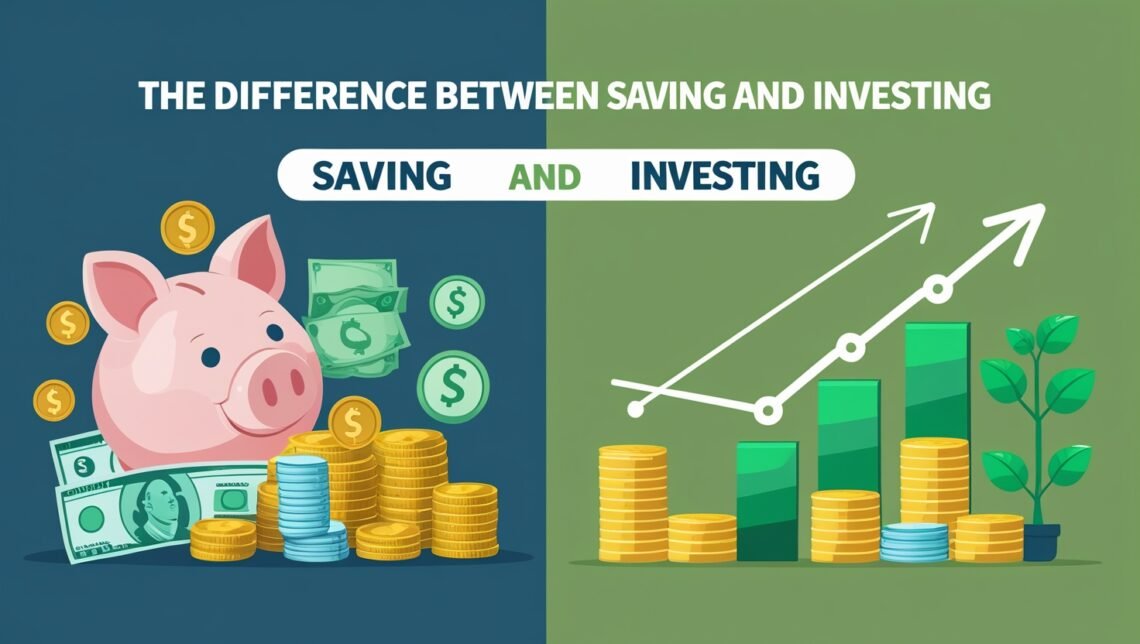
Saving and investing are two financial tools that are ways of managing a person’s money, but the purpose, risk level, and time period of both are completely different. Saving means that you keep your money in a safe place, like a bank account, so that it can be used when needed. It is for short-term goals like an emergency fund, saving money for a vacation, or a necessary purchase. Investing means you put your money in an asset, like stocks, mutual funds, or real estate, that can give you a higher return in the long term. Investing involves risk, but the return is also high. In savings, money is usually safe, but its return is low, just equal to the interest rate. People often get these two things confused, but actually, saving and investing both have their own different purposes and benefits.
Saving gives you financial security, while investing is a way of increasing your wealth. Every person should understand how both work so that they can make their financial planning smart. First, it is important to understand the basic difference between saving and investing; only after that can you decide which option you should choose at what time.
Purpose and Goals: Why People Save vs. Why They Invest:
People do both saving and investing, but their purpose is very different. When a person saves, their purpose is to keep money safe for some need, like an emergency, medical expense, or small purchases. Saving focuses on short-term goals. People achieve this by keeping money in a bank account, a savings account, or a digital wallet so that they have money ready during difficult times. Investing has the purpose of achieving long-term goals like retirement planning, buying a house, starting a business, or increasing wealth. The focus of investing is to grow money over time. In this, you take a risk, but the reward is also high.
When you invest, you are planning for the future. In savings, money is safer, but due to inflation, its value can decrease with time. While investing money grows and your purchasing power can increase. The goals of every person are different, so who should start saving first and who should invest? But it is important that you understand which approach is better for which goal. The moment you make your financial goals clear, you can easily decide whether to save or invest.
Risk Factor: Safety vs. Volatility
The biggest difference between saving and investing is their risk level. When you save, you are keeping your money in a safe environment like a bank savings account or fixed deposit. This money is also insured, and you know how much return you will get. The risk in saving is almost zero, so it is ideal for people who want to manage their money without any loss. On the other hand, in investing, you put your money in an asset where there is a possibility of market ups and downs, like the stock market, mutual funds, or real estate. There is risk in investing, but this risk also comes with a reward. You can double your money, or sometimes you can also incur a loss. This happens due to volatility, i.e., price fluctuations.
Hence, investing is right for those people who can tolerate risk and are ready to wait in the long term. Every person’s risk tolerance is different. Some people want high returns by taking high risks, while some people prefer steady returns while being safe. It is very important to understand which category you fall into. When you understand your risk level, you can decide better whether you should save or invest.
Returns Comparison – What You Can Expect:
When it comes to saving money, people think that there can be better returns than saving and investing. Savings usually give low returns. If you keep your money in a bank savings account, you get only 5% or less interest, and that too every year. And when inflation is 10%, your money is decreasing. On the other hand, you can expect higher returns by investing. In the stock market or mutual funds, you can get 10%, 12% or sometimes even more return, but it is not fixed. Return depends on the market. The benefit of investing is that if you invest money with patience in the long term, your wealth increases through compound interest. In savings, money remains stable, but it grows slowly.
There is fluctuation in investing, but there is a chance of growth in the long term. Here, it is important to understand that saving is for short-term safety and investing is for long-term growth. Every person should see what their goal is and what kind of return they should expect. If you need money for an emergency, then saving is fine, but if you want financial freedom after 5 or 10 years, then investing is a better option.
When to Save and When to Invest:
Financial needs are different at every stage of life, so it is important to understand when to save and when to invest. When you are at the beginning of your career, you should first create an emergency fund. This fund should cover basic needs for 3 to 6 months, such as rent, bills, and groceries. This money should always be kept in the savings account so that it can be used in any unexpected situation.
When you have this security, then you can move towards investing. Investing should start when your income is stable, you have an emergency backup, and you are planning long-term goals. Saving is best for short-term needs like vacation, a car, or a wedding. Investing is right for long-term goals like retirement, buying a house, or children’s education. If you can need money quickly, then save. If you have the patience for 5 or 10 years and can take the risk, then investing is better. Never invest all the money in one place. Keep a little in savings and invest a little to maintain a balance. Always analyse your financial goals, risk tolerance, and market conditions. This decision is not just a matter of numbers; it is a decision that has to be made after thinking carefully.
Conclusion:
Saving and investing are both important tools in your financial journey. Both have their roles, and their importance is different. By just saving, you can handle emergencies, but you cannot protect your money from inflation. And by just investing, you can take risks and save money, but if an emergency comes, it can be difficult if you do not have cash. Therefore, maintaining a balance between the two is the best approach. When you are clear about your goals, such as short-term and long-term needs, then you can decide how much money to keep in savings and how much to invest.
A smart person takes advantage of both tools. Saving gives you peace today, and investing gives you confidence tomorrow. The combination of both strengthens your overall financial health. It is important to understand that saving and investing are not opposites of each other; rather, they complement each other. Every person should make it a habit in their routine to allocate some amount every month to saving and some to investing. This way, you manage risk and also take a chance for growth. Today’s smart decision can give you financial freedom in the future.